
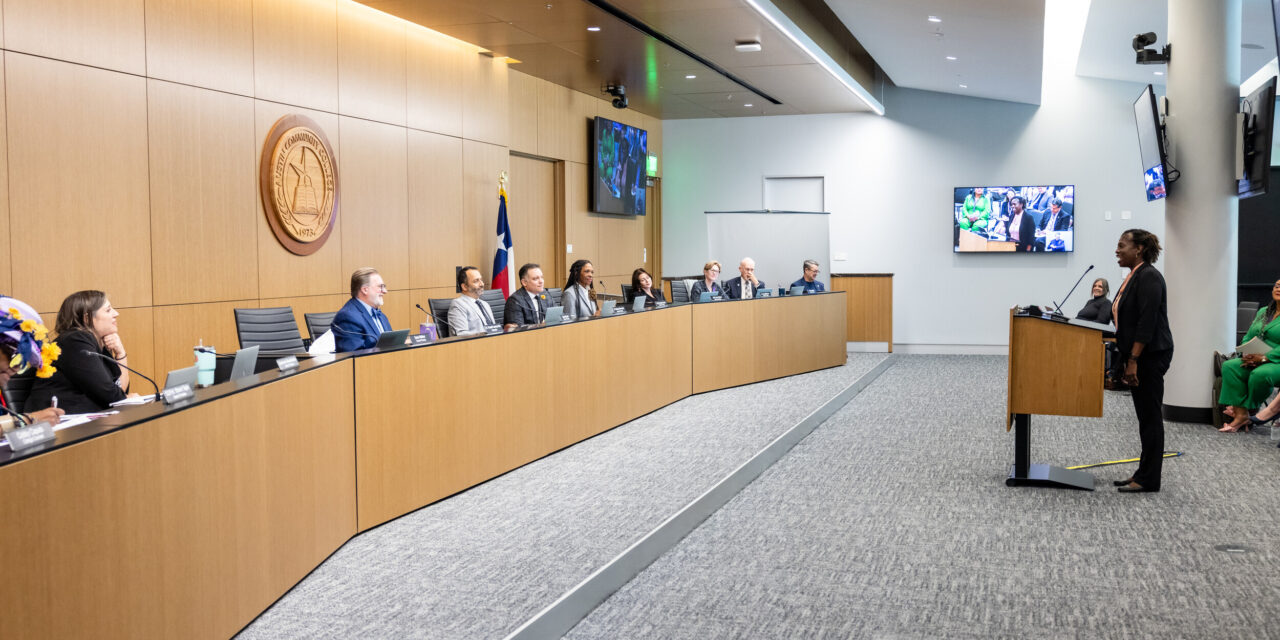
The Austin Community College District (ACC) Board of Trustees met for its regular meeting on Monday, June 1. Highlights include an update on the Theory of Change, Financial Aid, and the 2026-27 Budget Study.
Below are highlights from the meeting.
Changes to Financial Aid
During the work session preceding the meeting, the Board received an update on federal changes to financial aid mandated by The One Big Beautiful Bill Act.
The new regulation will take effect on July 1, 2026. It requires institutions to prorate annual undergraduate loan limits based on the number of hours students are enrolled. Since the majority of ACC students enroll part-time, College administrators shared concerns that reduced loan caps could create affordability hurdles, which would threaten student persistence and graduation rates.
ACC’s Financial Aid team launched a proactive plan, including targeted communications, specialized staff training, and a dedicated information web page. The College is currently working through nationwide technical setbacks with Ellucian, with a critical corrective patch delayed until mid-summer. ACC IT and financial aid teams are working to ensure processing and data accuracy before the 2026–27 academic year begins.
Theory of Change Design Team Update: Strategic Scheduling
The College presented its final recommendations from the Strategic Scheduling Theory of Change Design Team. The newly proposed Cross-Departmental Scheduling Model repositions scheduling as core institutional infrastructure. The strategic framework aims to blend multi-year course planning, instructional space optimization, and student support services into a seamless journey that fosters equity, predictability, and campus belonging.
To eliminate current systemic silos and technical friction, the initiative outlines several recommendations, including:
- Establishing a cabinet-aligned central scheduling office to coordinate districtwide logistics
- Single integrated workflow supported by the Student Information System (SIS)
- Standardized academic scheduling grid
- Shift toward a structured two-year development cycle paired with full-year registration
Additionally, the design includes a single, districtwide system for managing reservable spaces and calls for expanded, consistent campus operating hours to ensure evening, weekend, and online learners have equitable access to vital academic and support services.
Budget Study
Administration provided an update on the fiscal year 2027 (FY27) budget, focusing on cost-saving opportunities the College has identified to present a balanced budget.
First, the College released the FY27 Technology Plan, which includes a computer refresh and renewal for employees, core and electronic security infrastructure, departmental applications, information security, SIS, and enterprise applications. Trustees also received an update on facilities improvement plans, which include system maintenance, furniture, and programmatic renovations. The College was able to identify additional funding sources for these needs through bond funds, trimming about $2 million off the final budget.
Administration was also able to identify multiple staff positions that have been vacant for over a year. After conversations with each department, several positions were identified as no longer needed, and those dedicated funds were released back to the College.
Finally, the administration provided a compensation package, which includes a 2% annual raise, plus a 1.5% one-time lump-sum payment. The College recommends maintaining the current minimum wage of $23 an hour. Based on the annual survey from the Texas Community College Teachers Association (TCCTA), no market adjustments are needed for faculty.
“We’ve entered a different financial environment than we’ve seen in recent years, creating significant revenue pressure for the College,” said ACC Chancellor Dr. Russell Lowery-Hart. “I’m proud ACC has spent years building a strong financial foundation. Because of that, we’re still able to invest in our employees through salary increases while staying responsible stewards of public resources. At many institutions facing a challenge of this size, raises would be off the table. Our employees are the reason students succeed, and continuing to invest in them matters.”
The Board is expected to continue discussions on the budget during the July meeting.
New Deans Approved
The Board unanimously approved the administrative appointments of two key academic leaders, Dr. Nancy Stano and Dr. Karina Hernandez.
Stano has been named the Dean of Strategic Scheduling, moving up from her previous role as Associate Dean. In her new capacity, Stano will lead the Strategic Scheduling Hub and oversee a unified, student-centered course scheduling framework designed to support the College’s long-term completion goals.
Hernandez is the new Dean of Digital Learning, transitioning from her interim role. A former IBM engineer with a doctorate in Computer Science, Hernandez will oversee the College’s digital fluency initiatives, online course quality assurance, and workforce-aligned microcredentials while leading a newly reorganized shared-services distance education model.
Consent Items
The Board also approved a series of Texas Association of School Boards policy updates, including College District Governance, accounting inventories, facilities planning, information security, employment practices, curriculum, and standards of conduct.
A full recording of the Board meeting will be posted on the Board web page at austincc.edu/board.