
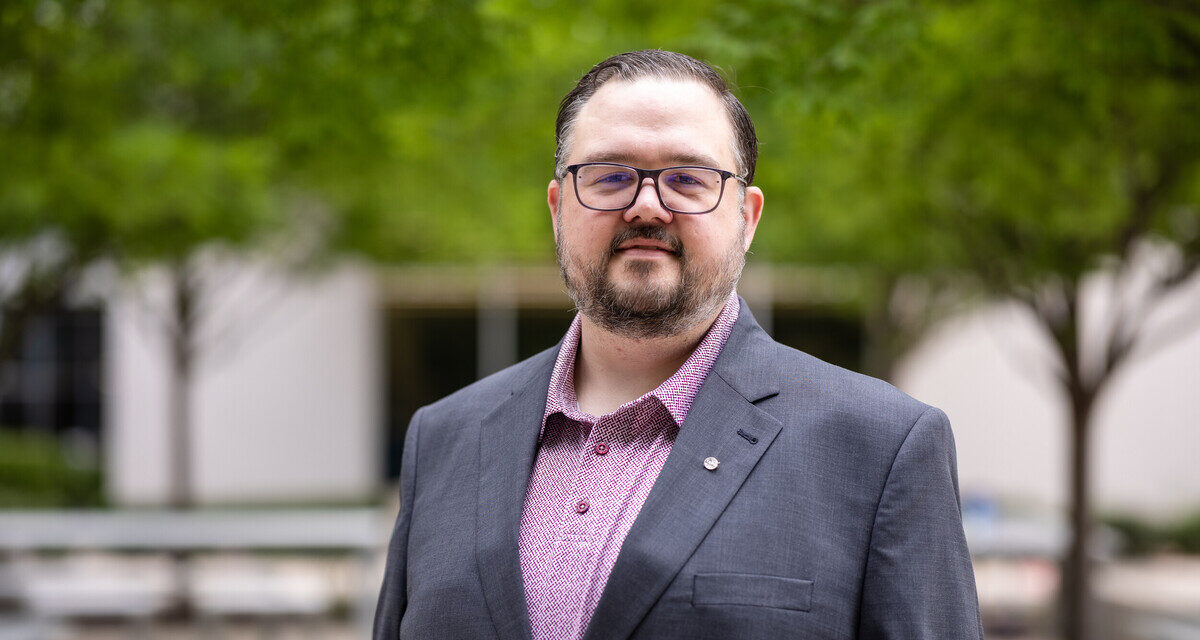
An Austin Community College District (ACC) Honors Program student is using opportunities beyond the classroom to investigate the story behind one of the most recognizable symbols of the Apollo era. For decades, a box of NASA documents sat quietly in the home of Minna Lo Squires, a NASA civil servant who worked in procurement during the Apollo era.
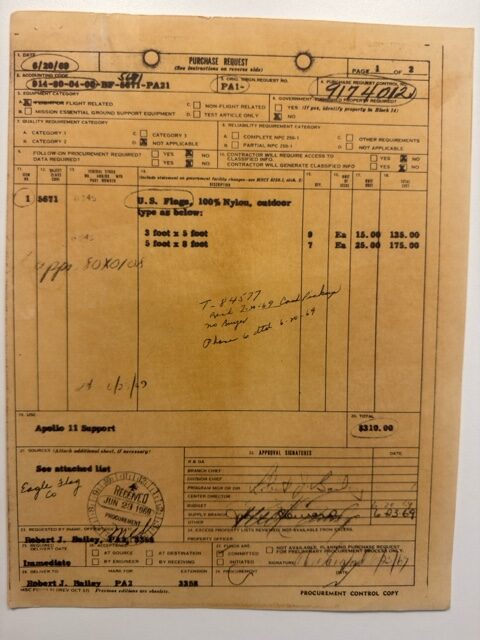
Now, nearly six decades later, those documents are helping ACC Government major Gordon Ray investigate a mystery surrounding one of the most recognizable moments in human history: the planting of the American flag on the Moon.
Gordon first saw the documents at Squires’ 100th birthday celebration. Squires was his grandmother-in-law and had saved the paperwork from her years at NASA, where she worked as a Procurement Operator and spent at least a decade as a federal employee.
Gordon had heard about the documents shortly after he and his wife married. But at first, he assumed the story behind them was already known. Then he started looking more closely.
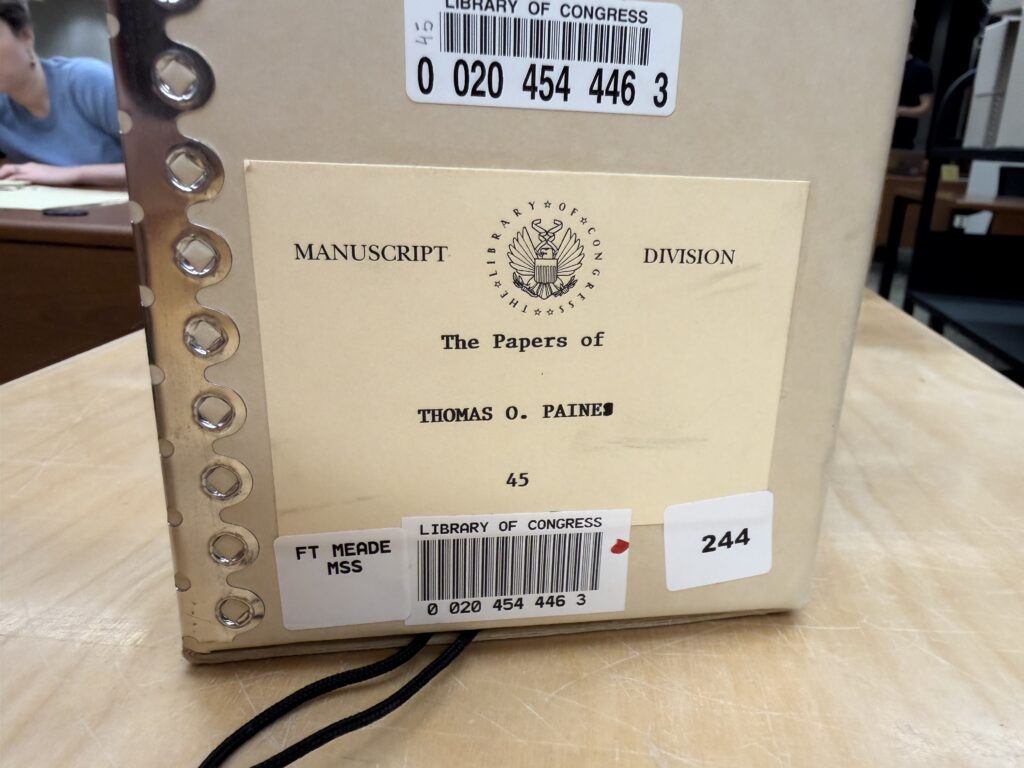
What began as a family connection eventually turned into an independent research project that took Gordon from ACC to NASA Headquarters, the Library of Congress, the National Archives, the Smithsonian, and the University of Maryland.
“I’ll be talking a lot about how we got to that flag and the delightful nuance in the timeline of events that are reverberating into our next steps on the Moon.”
Gordon’s work builds on research by Dr. Anne Platoff, whose scholarship has examined the engineering and political history of the Apollo 11 flag, the Apollo lunar flags, and the use of flags throughout the U.S. space program.
Gordon’s research takes a different approach, focusing on the on-the-ground origin story of the Apollo 11 flag and the people, paperwork, and decisions behind it. That meant going beyond the better-known photographs and official accounts and looking at the administrative records that helped make the mission possible.
“The archivists were extremely helpful. I leaned on their experience, shared what I was looking for, and they pointed me in the right directions.”
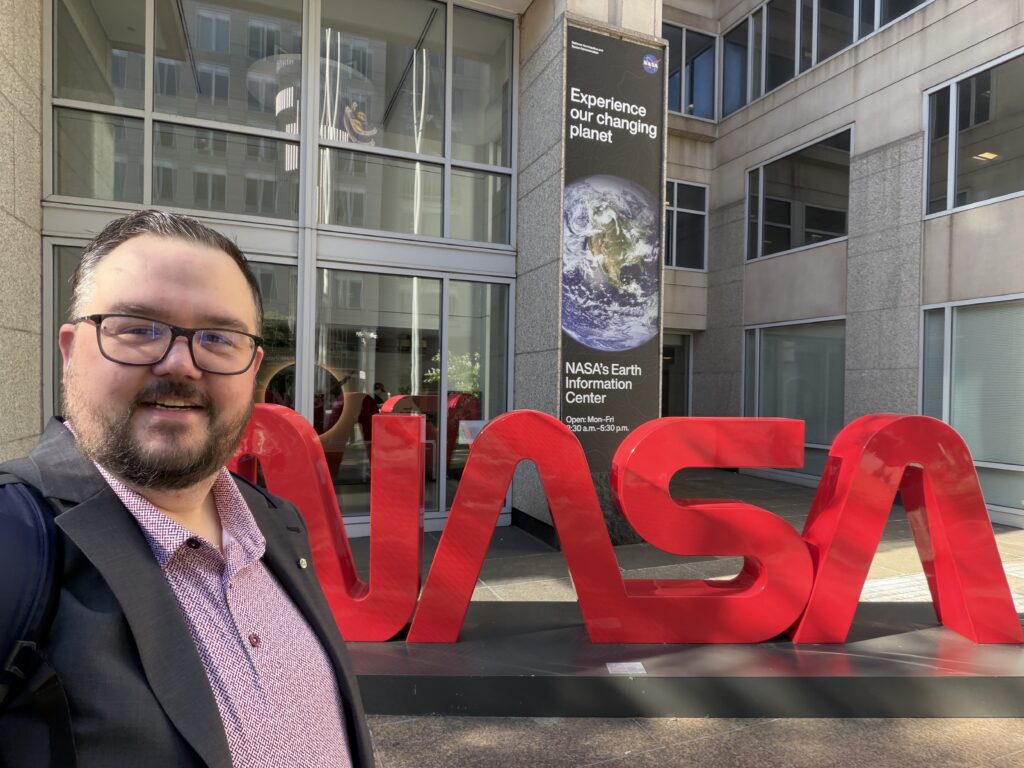
At NASA Headquarters, he spent three days researching archival records, met with NASA Chief Historian Dr. Brian Odom, and spoke with a New York Times reporter about his work.
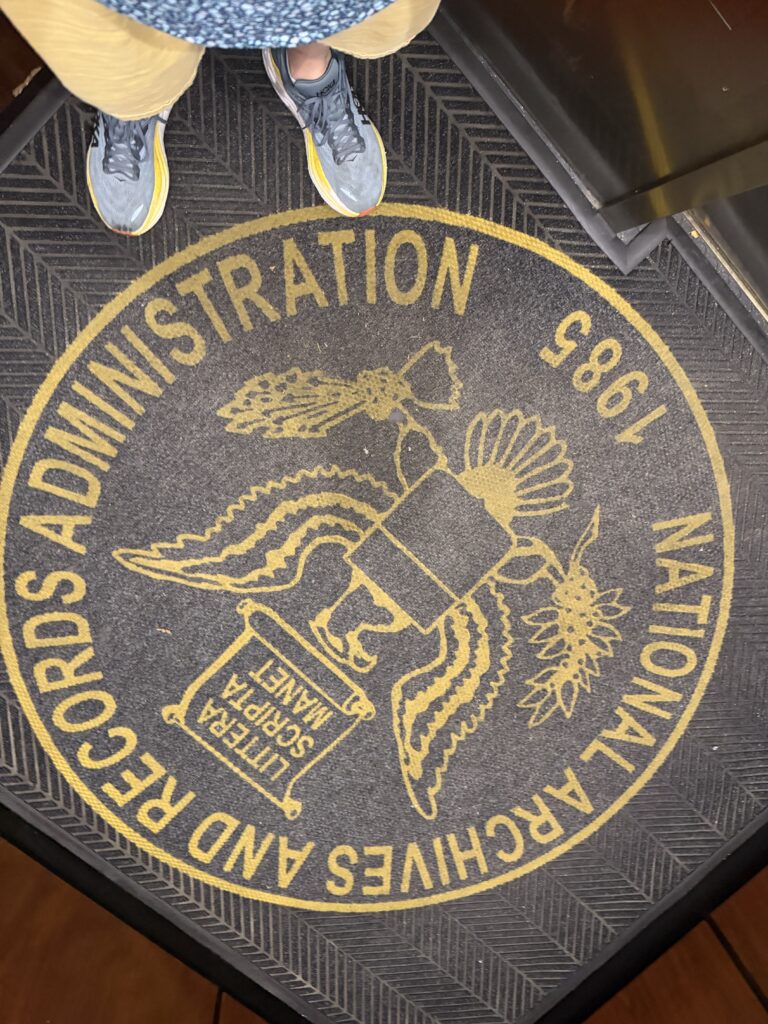
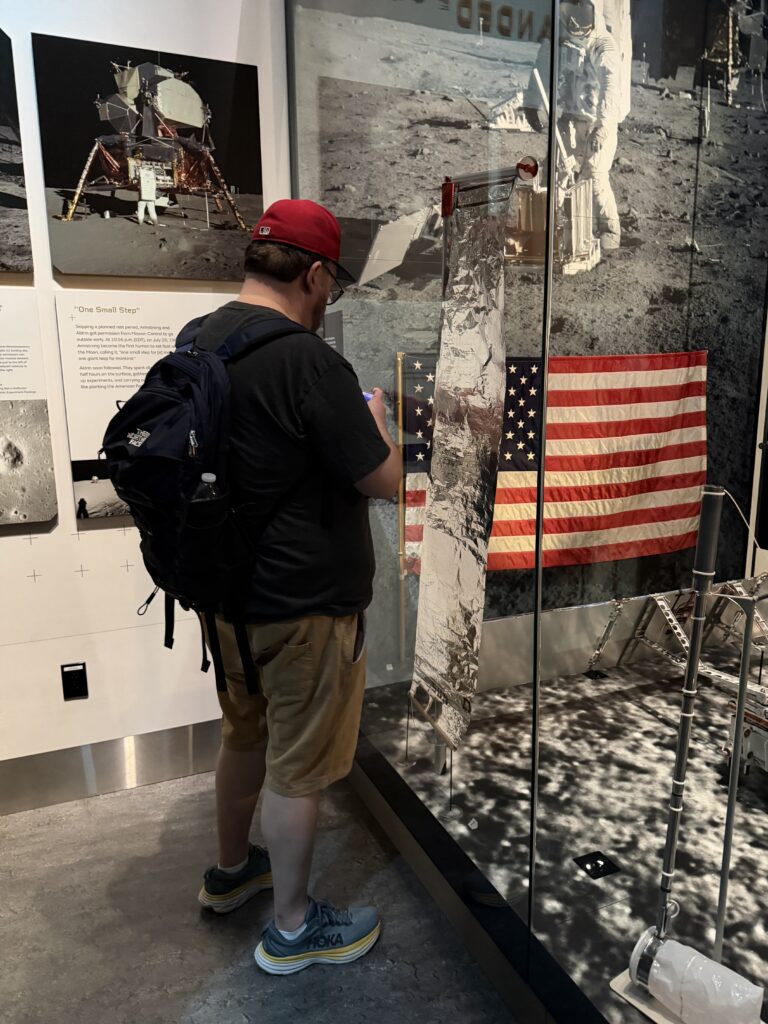
“It was surreal to get a badge and swipe in past the security gate for three days in a row. I met with the Chief Historian, Dr. Brian Odom, and a reporter from the New York Times to chat a bit about my research, which was exciting and really a moment where you have to just pinch yourself to make sure you aren’t dreaming.”
Odom’s feedback gave Ray another reason to keep digging.
“The record-scratch moment was when Dr. Odom said that based on what he knew of NASA’s history and how it operated at the time, my conclusions were ‘plausible.’ Wow.”
The experience has also changed the way Ray approaches his education. Rather than simply looking for an answer, he has learned how to develop a question, follow evidence, work with experts, and recognize when a small detail could change the larger story. That process is part of what made the project possible at ACC.
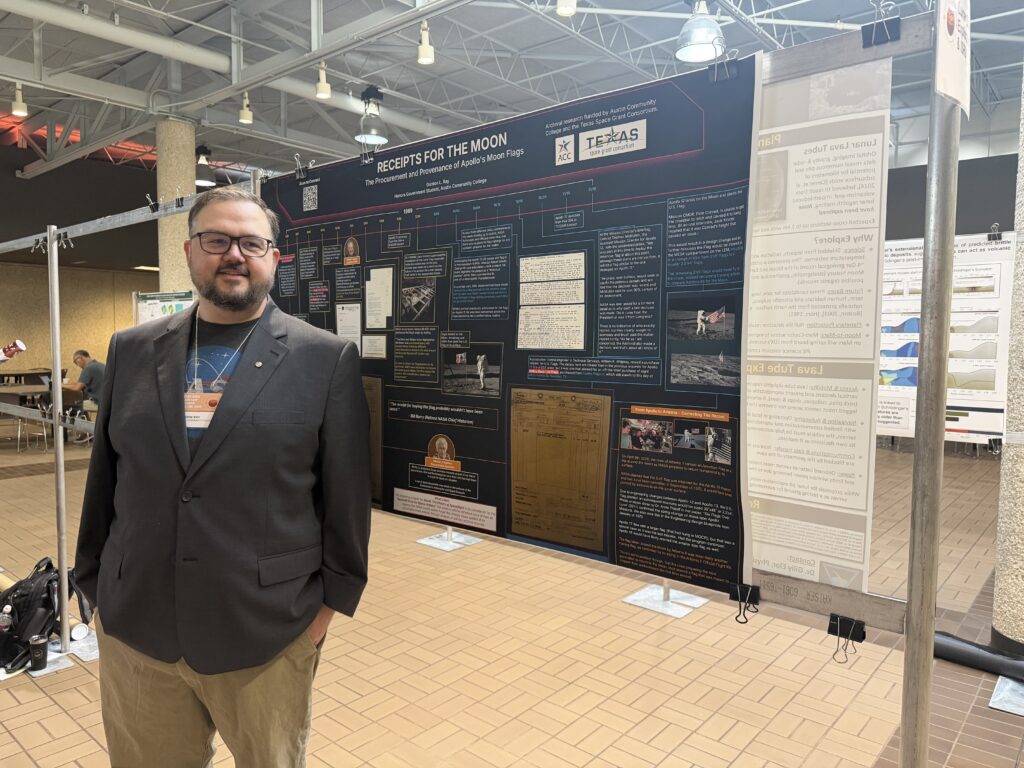
Ray received funding from ACC and NASA’s Texas Space Grant Consortium to support his research. He also had the opportunity to present his findings at the Texas Area Planetary Sciences Meeting at The University of Texas at Austin on August 20, 2026.
The experience has taken him beyond a traditional classroom assignment and into the world of academic research. It has shown him that meaningful research doesn’t always begin with a famous artifact or a major discovery. Sometimes, it begins with a box of paperwork that someone thought was worth saving.
One set of Squires’ documents has now been accessioned into the Smithsonian National Air and Space Museum archives. The preserved documents were low-level administrative paperwork and were long believed to have been destroyed. Her decision to save them nearly 60 years ago may now help researchers better understand what actually happened behind the scenes of Apollo 11.
Gordon is now preparing a paper for submission to the Sacknoff Prize in Space History through Quest: The History of Spaceflight.
His research continues to evolve, too. What began with a family story has led him into questions about NASA’s decision-making, international cooperation, political symbolism, and the future of human exploration.
Part 2: Who Really Chose the Apollo 11 Moon Flag? ACC Student Follows the Paper Trail.